
Palacio de las Dueñas, Seville
Written by official guides
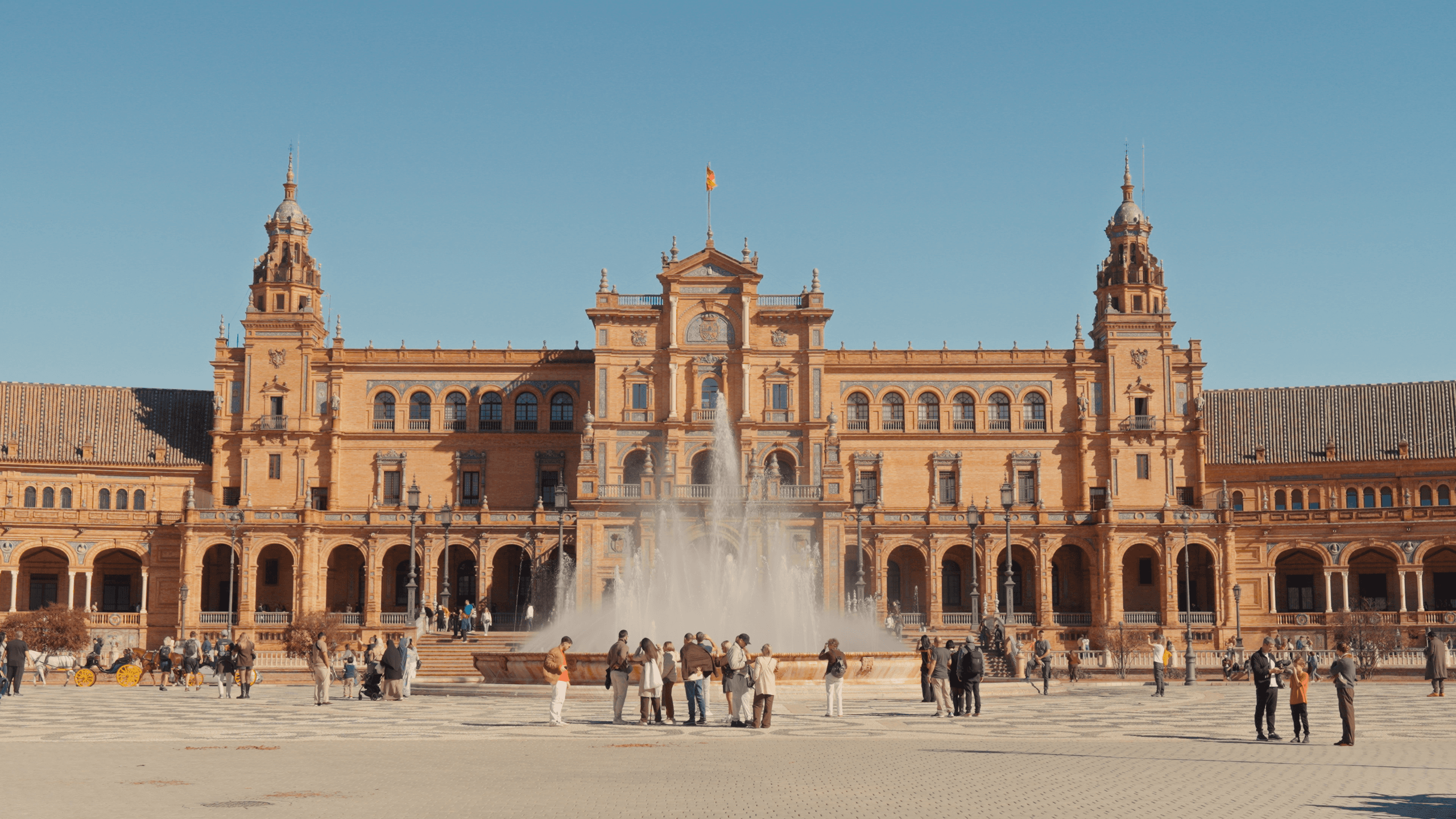
The aristocratic palace where Antonio Machado was born and where the House of Alba has resided for five centuries. A listed heritage site with over 1,400 works of art, Renaissance gardens and a unique Gothic-Mudéjar architecture found nowhere else in Seville.
Open to the public since 2016, on the initiative of the 19th Duke of Alba. The Sevillian residence preserves the Andalusian courtyards that inspired the poet's verses: "My childhood is memories of a courtyard in Seville and a bright orchard where the lemon tree ripens." The art collection includes works by Joaquín Sorolla, Jacopo Palma the Younger and Sofonisba Anguissola, spread across rooms with Mudéjar plasterwork and Renaissance coffered ceilings. The famous Garden of the Lemon Trees stands out among the outdoor spaces, with orange trees, palms and myrtles. Free admission on Mondays from 16:00.
History: from the Pineda family to the House of Alba
The Pineda family built the original palace in the 15th–16th centuries. This family, part of Seville's patrician class, held important posts such as chief notary of the city council. They took part in the Granada War and were lords of Casa Bermeja.
The Pineda family lost the palace after a kidnapping: Juan de Pineda was captured by the Moors, and the family urgently needed money to pay his ransom. They sold the property to raise the funds.
Fernando Enríquez de Ribera bought the palace. He was 2nd Marquis of Villanueva del Río. His daughter Antonia Enríquez de Ribera married Fernando Álvarez de Toledo, future 6th Duke of Alba, in 1612.
Since 1612 it has belonged to the House of Alba. More than 400 years and 19 generations of dukes have passed. The palace remained this noble house's main Sevillian residence.
Antonio Machado was born here in 1875. During the 19th century the palace functioned as a tenement building. The poet's family lived here while his father managed the property. His verses about "a courtyard in Seville" were born in these very gardens.
Cayetana de Alba defined the 20th century here. The 18th Duchess made Las Dueñas her favourite residence. She hosted figures such as Empress Eugénie de Montijo, Jacqueline Kennedy and Grace Kelly.
The 19th Duke opened the palace to the public in 2016. Carlos Fitz-James Stuart decided to share the historic legacy and the art collection built up over the centuries.
What is the Palacio de las Dueñas
The Palacio de las Dueñas is a 15th-century palace-house that has served as an aristocratic residence for 500 years. Listed as a heritage site in 1931, it represents the best-preserved noble Sevillian architecture in the city. Its name comes from the now-vanished Monastery of Santa María de las Dueñas, demolished in 1868.
The House of Alba keeps this palace as its main Sevillian residence. It's not a conventional museum: it's a "lived-in house" where the dukes still use some rooms while others are open to the public.
Among the visit's biggest draws are Antonio Machado's verses about these very gardens, an architecture blending Gothic-Mudéjar, Renaissance and Baroque elements, the Garden of the Lemon Trees with over 7,000 plants, the 1,400-piece art collection (Sorolla, Palma the Younger, Anguissola), and free admission on Mondays from 16:00.
Architecture of the Palacio de las Dueñas
The palace blends Gothic-Mudéjar and Renaissance architecture from the 15th to the 17th centuries. The Pineda family's original construction incorporated Mudéjar elements typical of Seville's patrician class. Later extensions added Renaissance details during the House of Alba's golden age.
Main courtyards
Andalusian courtyards structure the whole complex. The main courtyard retains round arcades on marble columns. Mudéjar plasterwork decorates the walls with geometric and plant motifs. The upper gallery shows polychrome wooden Renaissance coffered ceilings.
The Garden of the Lemon Trees represents a fusion of landscaping traditions. It combines Renaissance geometric design with Islamic plant exuberance. Over 7,000 plants include orange trees, date palms and myrtles.
Noble rooms and artistic details
The main halls have 16th–17th-century coffered ceilings with polychrome decoration. The upper galleries show balconies with wrought-iron railings and Sevillian tilework. The main staircase has Carrara marble steps with an ornate wrought-iron rail. The historic tilework preserves ceramic panels from Triana workshops dating back to the 16th century, and Mudéjar plasterwork decorates in relief with Arabic inscriptions and plant motifs.
Works of art and collections
The Palacio de las Dueñas' art collection numbers over 1,400 pieces spanning five centuries of Spanish and European art. This private collection reflects generations of patronage by the House of Alba.
Notable paintings include works by Joaquín Sorolla (portraits and genre scenes), Jacopo Palma the Younger (16th-century Venetian master), Sofonisba Anguissola (pioneering Italian Renaissance painter) and canvases from the 17th–18th-century Sevillian school.
The palace also holds 16th–17th-century Flemish tapestries with mythological and heraldic scenes, period furniture (chests, bargueños and writing desks) and ceremonial silverware belonging to the House of Alba.
What to see on the visit
The visit takes 45–60 minutes through the main rooms, courtyards and gardens. A self-guided tour lets you explore the areas open to the public at your own pace.
Must-see stops: the Main Courtyard, with marble arcades and Mudéjar plasterwork; the Garden of the Lemon Trees, the most photographed corner; the Noble Halls, with polychrome coffered ceilings, Flemish tapestries and period furniture; and Antonio Machado's Rooms, where the poet was born in 1875, with information panels about the family.
Tickets, opening hours and prices
The palace opens every day of the year. From April to September, hours are 10:00 to 20:00. From October to March it closes earlier, at 18:00. It may occasionally close for private Alba family events.
General admission is €14 for adults. Students up to 25 pay €10. People over 65 also pay €10. Children under 6 enter free. On Mondays from 16:00 everyone enters free.
Guided tours cost €25 and last an hour and a quarter. It's located at Calle Dueñas, number 5, easily reached by metro line L1 or several bus routes.
The Palacio de las Dueñas has limited accessibility in the historic areas. The ground floor is wheelchair-accessible in most courtyards and main halls. The upper floors have stairs and no lift. The Garden of the Lemon Trees is fully accessible.
How to combine the visit
The Palacio de las Dueñas doesn't run its own guided tours, but it can be explored through self-guided visits with an audioguide included in the price, recommended duration 60–75 minutes.
Its central location makes it easy to combine with other monuments, such as the Setas de Sevilla (170 metres away) or the Casa de Pilatos (550 metres away). The best approach is to start with a free tour or general tour of Seville to get the historical context, then visit the Palacio de las Dueñas independently with the audioguide.
Book your guided tour
Want to see it with an official guide telling you about it in person?